
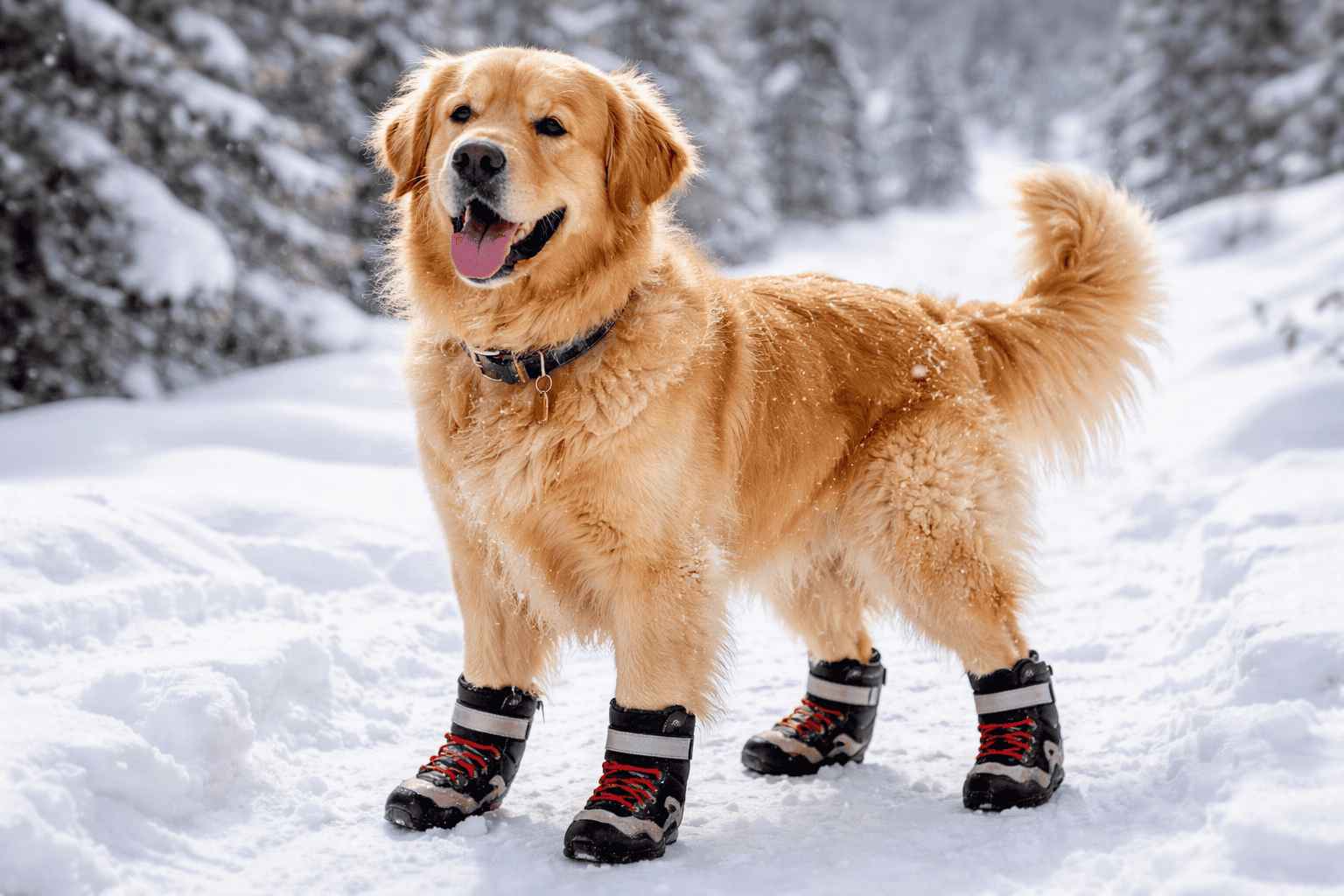
Dogs and their humans face unique challenges during winter. Cold weather can be harsh on tender paws, and even pets with thick pads are vulnerable to ice, snow, and road salt. Winter dog boots are essential for pets living in colder climates and should be chosen carefully to ensure comfort and safety for both pets and their owners.
Three Winter Boot Material Types
For winter dog boots for snow, manufacturers use a variety of materials to provide protection and warmth. Insulation and water resistance are often achieved with neoprene, rubber, or water-resistant fabrics. Inner linings typically feature soft fleece or other heat-retaining materials to enhance comfort and warmth. Non-slip soles provide added stability on icy or slippery surfaces.
How Winter Boots Offer Protection
Winter boots act as a barrier between sensitive paw pads and harsh surfaces. They help protect against frostbite and reduce direct contact with frozen ground. Boots also block harmful chemicals and road salt that can irritate skin and increase the risk of infection. Enhanced traction lowers the chance of slipping or falling during winter walks.
Fit Matters for Comfort
Proper fit is one of the most important factors in whether dogs will tolerate wearing boots. Boots that are too tight may cause discomfort, while loose boots can slip off easily. Adjustable straps and sizing guides help ensure a snug yet comfortable fit. It may take time for dogs to adjust, so trying the boots indoors first can help ease the transition.
Training Dogs to Wear Boots
Introducing boots gradually improves acceptance. Start by allowing dogs to sniff and inspect the boots, then have them wear them for short periods indoors. Reward calm behavior with treats or verbal praise. Practicing indoors helps build confidence and reduces anxiety before heading outside.
Caring for Winter Dog Boots
Regular cleaning helps extend the life of winter dog boots. Wipe them down with a damp cloth after walks to remove dirt, salt, and moisture, then dry them thoroughly. Inspect boots for damage such as cracks or loose stitching, as these can compromise protection. Store boots in a dry, accessible place so they are always ready for use.
Benefits Beyond Protection
Winter boots also help maintain cleanliness by preventing dirt and chemicals from being tracked indoors. For dogs with allergies or sensitive skin, boots can reduce irritation by limiting direct contact with harmful substances. Many pet owners notice their dogs are more comfortable and willing to walk in snow when wearing protective footwear.
Seasonal Considerations for Boot Use
Winter conditions can vary widely by region. Some areas experience heavy snow and ice, while others face cold rain and slush. The type of boot needed depends on local weather and your dog’s specific needs. Heavily insulated, waterproof boots suit colder climates, while lighter water-resistant boots may be sufficient in milder conditions.
Signs That Boots Are Needed
Certain signs indicate a dog may need extra paw protection. Reluctance to walk, excessive paw licking, or visible redness may signal irritation from cold or chemicals. Cracked or bleeding pads are clear warning signs. Recognizing these symptoms early and using boots can help prevent further injury and promote faster recovery.
Conclusion
Winter dog boots are a practical solution for protecting paws from harsh seasonal conditions. Choosing durable, well-fitted boots and allowing a gradual adjustment period ensures a positive experience. With proper preparation, winter walks can remain safe, comfortable, and enjoyable for dogs and their humans all year long.
