
Sleep apnea is a common and disruptive sleep disorder that impacts more than 30 million Americans, with many more remaining undiagnosed. Those experiencing it will repeatedly stop and start breathing while sleeping, which occurs when the airways relax so much that they narrow or close completely. This prevents their body from getting enough oxygen.
Those experiencing sleep apnea will lack quality, restorative sleep, which can impact the body’s ability to rest, recover, and repair, and has been linked to other issues such as weight gain, diabetes, heart disease, and depression. Other symptoms of sleep apnea include loud snoring interlaced with periods of quiet, excessive daytime sleepiness, morning headaches, episodes where they may wake gasping or choking, and depression or mood changes.
Thankfully, sleep apnea can be diagnosed via a sleep study. Conducting this study often involves many healthcare professionals, including doctors, RN’s, and others who have completed the requisite studies, such as MSN online programs, and it can be completed over an evening. After diagnosis, the most common treatment prescribed is continuous positive airway pressure (CPAP) machines.

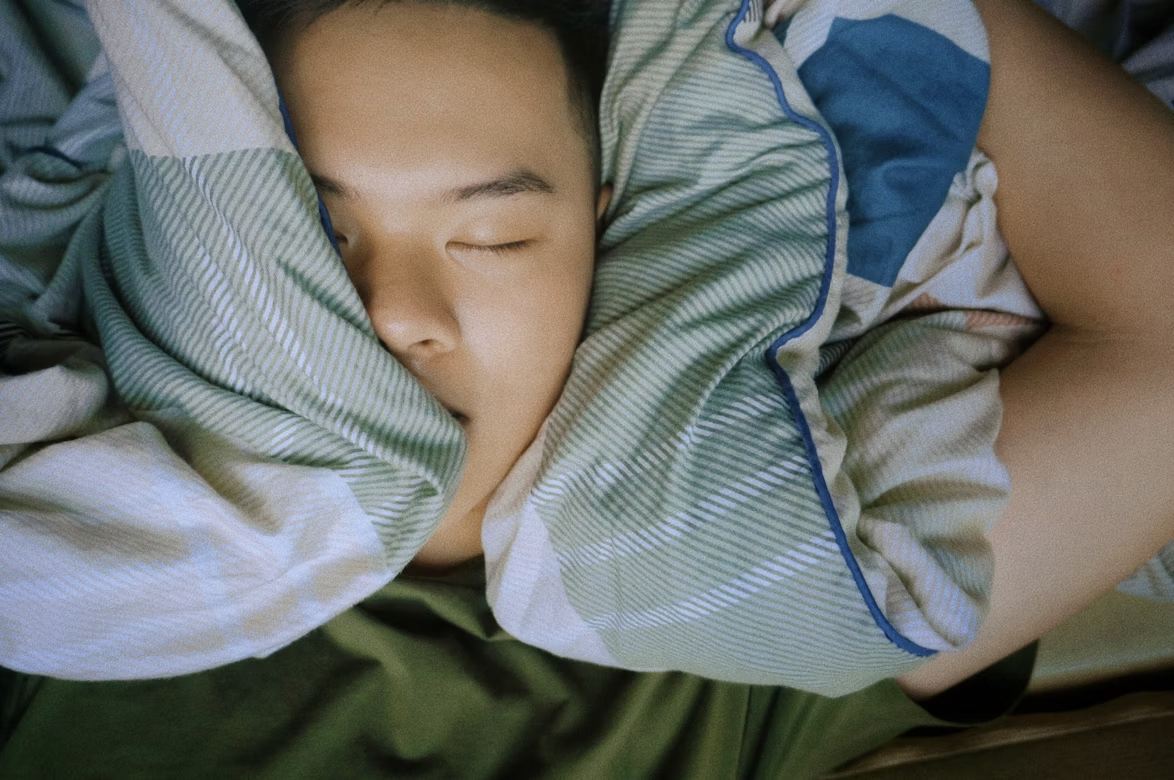
Using a CPAP machine can help reduce daytime sleepiness. Photo by Miikka Luotio on Unsplash.
What is a CPAP machine?
A CPAP machine helps to treat sleep apnea by delivering continuous air through the mouth and/or nose to help keep airways open while you sleep. Components of a CPAP machine include:
- A fitted mask that is placed over your nose, mouth, or both nose and mouth.
- Straps to position the mask on the face.
- A tube that connects the mask to the machine motor.
- A motor that blows continuous air into the tube.
- An air filter that purifies the air entering your nose, mouth, or both.
Some CPAP machines have additional features like heated humidifiers and adjustable pressure settings.
Although a CPAP machine is the most common, other types of machines can assist with sleep apnea, including an Auto CPAP machine that self regulates, a Bi-Level PAP that uses two different pressure (higher pressure when inhaling and lower pressure when exhaling), and an Auto-bilevel PAP which self regulates and uses different pressures.
Aside from the variations above, the mask portion of the CPAP machine is the main part of the machine that can vary. There are four main types of masks your healthcare provider may recommend:
- Nasal mask: A nasal mask covers your entire nose and is generally recommended for people who move around a lot while sleeping.
- Nasal pillow mask: A nasal pillow mask only covers your nostril area, rather than the entire nose, and some have prongs that fit in the nostril. People who wear glasses may consider a nasal pillow mask.
- Full mask: A full mask is a triangular mask that fits over the nose and mouth. This mask is recommended for people who breathe through their mouth while sleeping, or if you have a nasal blockage.
- Hybrid mask: A hybrid mask is a full-face mask that fits over the nose and mouth, but also has prongs or cushions that seal the nostrils without covering the bridge of the nose.
How does a CPAP machine work?
CPAP machines work by taking in room air, filtering and pressurizing it, then delivering a constant stream of this air through a tube and into a mask worn across the nose, mouth, or both. This airflow keeps the tongue, uvula, and soft palate from shifting too far into your airway, which stabilizes breathing and reduces the number of apneic events, which are when breathing stops or slows significantly.
For CPAP machines to successfully treat sleep apnea, the machine must be set up correctly as per your healthcare professional’s direction, and it must be used every time you go to sleep. The mask and tube must also be cleaned every day to prevent the buildup of germs, debris, and allergens.
The benefits and downsides of a CPAP machine
The benefits
Many benefits come with the proper use of CPAP machines:
- It reduces the number of breathing interruptions while sleeping, resulting in improved sleep quality.
- It reduces snoring, which may be impacting your partner.
- It reduces daytime sleepiness, headaches, and a dry throat.
- It can improve your mood and reduce symptoms related to depression.
- It can improve blood pressure.
- It reduces the risk of cardiovascular disease.
- It can improve cognitive function.
The downsides
Just like any other treatment of medical conditions, there can be downsides to using a CPAP machine:
- Learning to sleep while using the machine can be difficult and uncomfortable to start with.
- It requires ongoing maintenance, which can result in ongoing costs.
- It can cause congestion, a runny nose, dry mouth, and nose bleeds.
- The masks may cause skin irritation and redness.
- Swallowing air during CPAP treatment can lead to bloating and gas.
If you are experiencing difficulties or side effects from using a CPAP machine, it is important to speak to your healthcare provider.

This saved me a lot of time.
That is a really useful and fascinating bit of information. I am quite appreciative that you just gave us this important information. Kindly provide us with updates like this. I appreciate your sharing.